

Key points of this article:
- The global horticultural lighting market is projected to reach USD 44,3 billion by 2026, with over 70% professional adoption of LEDs – a strong signal for any producer still hesitant to migrate.
- High-performance LEDs now exceed the 3,0 µmol/J threshold: each watt invested produces more useful light and less wasted heat.
- The strategic pivot of 2026 is clear: profitable producers are no longer buying watts, they are buying "biochemical signatures" - targeted spectra that increase antioxidant activity by 18-19% and overall productivity by up to +33%.
- Replacing obsolete HPS systems represents 59% of the market share by 2035: renovation is no longer an option, it is an urgent economic decision.
- Before investing in 2027, four actions are non-negotiable: audit the existing situation, calculate the true ROI, master dynamic management and anticipate the requirements of niche markets (nutraceuticals, cosmetics, gastronomy).
Imagine two basil growers, neighbors in the same region, with comparable greenhouses and similar operating costs. One sells their harvest at the standard market price. The other, since precisely controlling the light spectrum at the end of the growing cycle, offers basil with a significantly higher concentration of aromas and essential oils—and charges 30% more to their fine-dining clients. The difference between the two? Not the surface area, not the water, not the fertilizer. The light.
This is precisely the shift that the horticultural lighting sector experienced in 2026. That year marked a fundamental evolution: light is no longer just another production input; it has become a lever for qualitative differentiation and net profitability. For producers who have not yet made this pivot, time is of the essence—and market data unequivocally confirms this.
At Vegetal Grow Development, we support horticulturalists, market gardeners, and research teams every week through this transition. This 2026 assessment and 2027 outlook are based on recent market data and our concrete observations in the field.
What are the 4 major developments that redefined horticultural lighting in 2026?
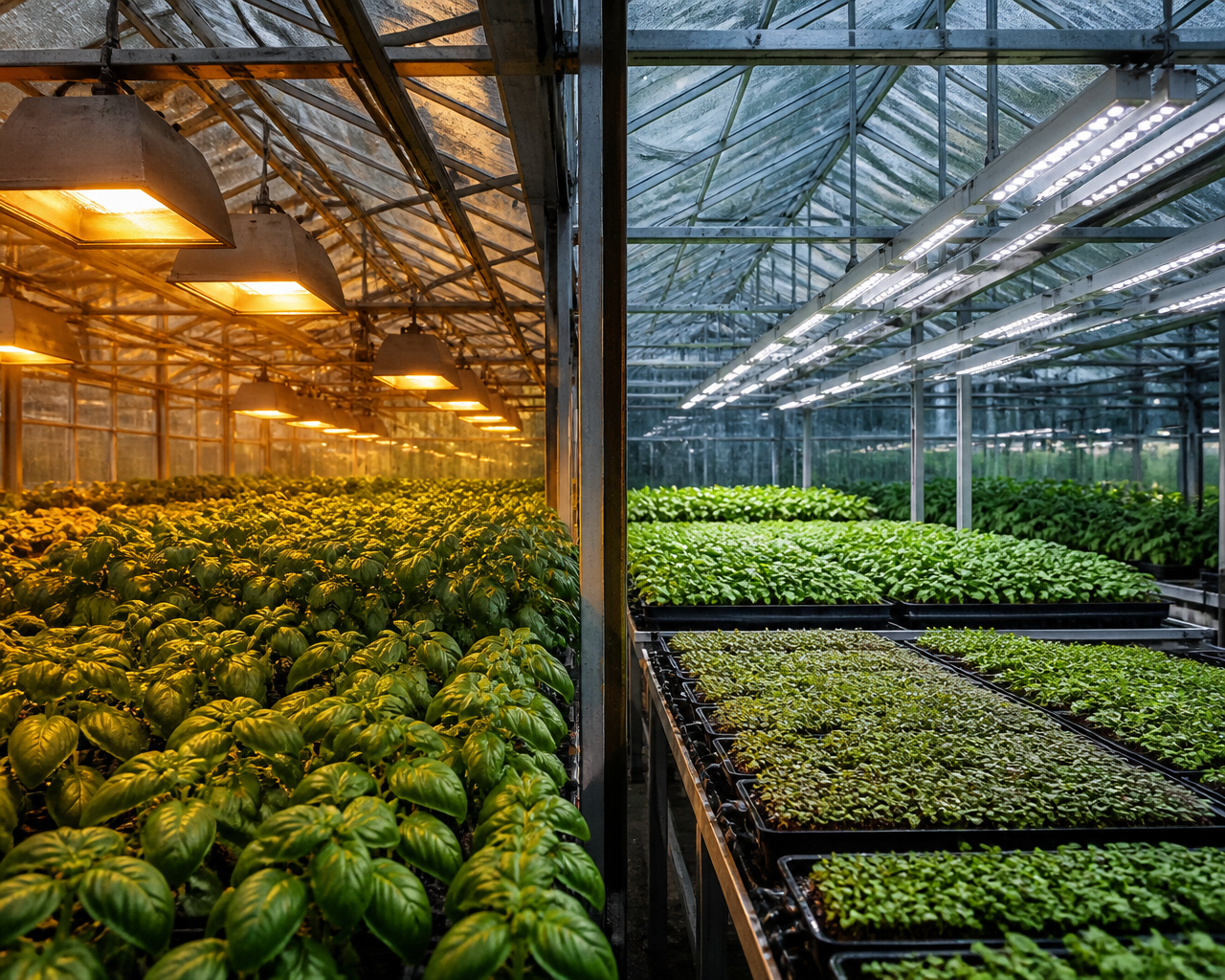
In 2026, four major developments restructured the professional horticultural lighting market: LED efficiency exceeded 3,0 µmol/J, intelligent control became standard, energy optimization emerged as a top purchasing criterion, and the demand for biochemical quality in crops redefined market expectations. These four factors form the framework for any investment in 2027.
LED efficiency: the 3,0 µmol/J threshold is now a floor
For a long time, an efficiency of 2,5 µmol/J was considered a good result for a professional horticultural LED. This threshold is now a thing of the past. High-performance equipment today achieves over 3,0 µmol/J, meaning that each joule of electricity produces more photosynthetically active light—and less wasted heat. For a farm operating at full capacity, this improvement translates directly into lower energy bills and extended equipment lifespan.
Dynamic piloting: from option to standard
Intelligent lighting control—dimming, cycle programming, and integration with agro-climatic management systems—has become widespread among professional growers. Where a simple on/off switch sufficed five years ago, today we're talking about progressive intensity curves, synchronization with climate data, and zone-based control. Systems that are 100% compatible with agro-climatic management systems allow for real-time adjustment of the light dose, according to external conditions and the specific needs of each growth phase.
Energy optimization: an investment criterion, not just an operational one.
Under pressure from energy costs and environmental regulations, energy efficiency has gone from being a selling point to a decisive criterion in tenders and investment decisions. Producers now calculate the total cost of ownership (purchase + maintenance + energy over 5 years) before approving a lighting project.
Biochemical quality: the new arena of competition
Finally, and this is probably the most significant change of 2026: premium markets demand proof of molecular quality. Terpene levels, antioxidant activity, pigmentation – these parameters, once reserved for research, are becoming measurable and differentiating selling points for producers who know how to control them through their light spectrum.
What do the 2026 market figures tell us?
The global horticultural lighting market is projected to reach USD 44,3 billion by 2026. Over 70% of professional installations now use LEDs, and the most dynamic segment is the retrofitting of existing systems. These figures are not simply indicators of growth—they paint a picture of opportunities and risks for every operation that needs to plan its investments.
"The horticultural lighting system retrofit segment (HPS to LED replacement) is expected to account for 59% of the market share by 2035." - Global Market Insights / Research Nester, Reports 2026-2035
This figure deserves closer attention. 59% of investments in horticultural lighting will come from renovations, not new construction. This means that the majority of professional operations still using HPS (high-pressure sodium) systems or first-generation LEDs are identified as markets ripe for transformation. If your operation falls into this category, you're not behind the curve—you're precisely where the market anticipates the next wave of investment.
| Indicator | 2026 value | What it means for you |
|---|---|---|
| Global horticultural lighting market | 44,3 billion USD | A sector experiencing sustained growth, with continuous innovation |
| LED adoption in the professional sector | >70% | HPS is becoming a minority: suppliers and after-sales services are reorienting themselves |
| Renovation segment by 2035 | 59% of the shares | Migrating from HPS to LED is the most cost-effective economic decision in the industry. |
| Professional LED efficiency | >3,0 µmol/J | The minimum threshold for a relevant investment today |
| Increased productivity with optimized spectrum | Up to +33% | The return on investment goes beyond simple energy savings. |
Why did successful producers stop buying watts in 2026?
The decisive turning point for 2026 is the shift from a quantitative approach (how many watts per square meter?) to a qualitative one (which spectral signature for which agronomic result?). The most profitable producers no longer think in terms of installed power – they think in terms of light recipes, calibrated according to the growth phase and the desired quality objective.
In practical terms, this evolution translates into two distinct lighting programs on advanced farms: a "growth" program focused on biomass, and a "metabolic" program focused on finishing, concentration of active molecules, color, and aromas. This spectral switch at the end of the cycle—over 5 to 7 days—can transform the market value of a harvest without altering the surface area, water volume, or inputs.
"The targeted addition of specific spectra (UV/Far-Red) allows for gains in antioxidant activity of 18 to 19% and an increase in overall productivity of up to +33%." - Agronomy/MDPI Scientific Studies, 2025-2026
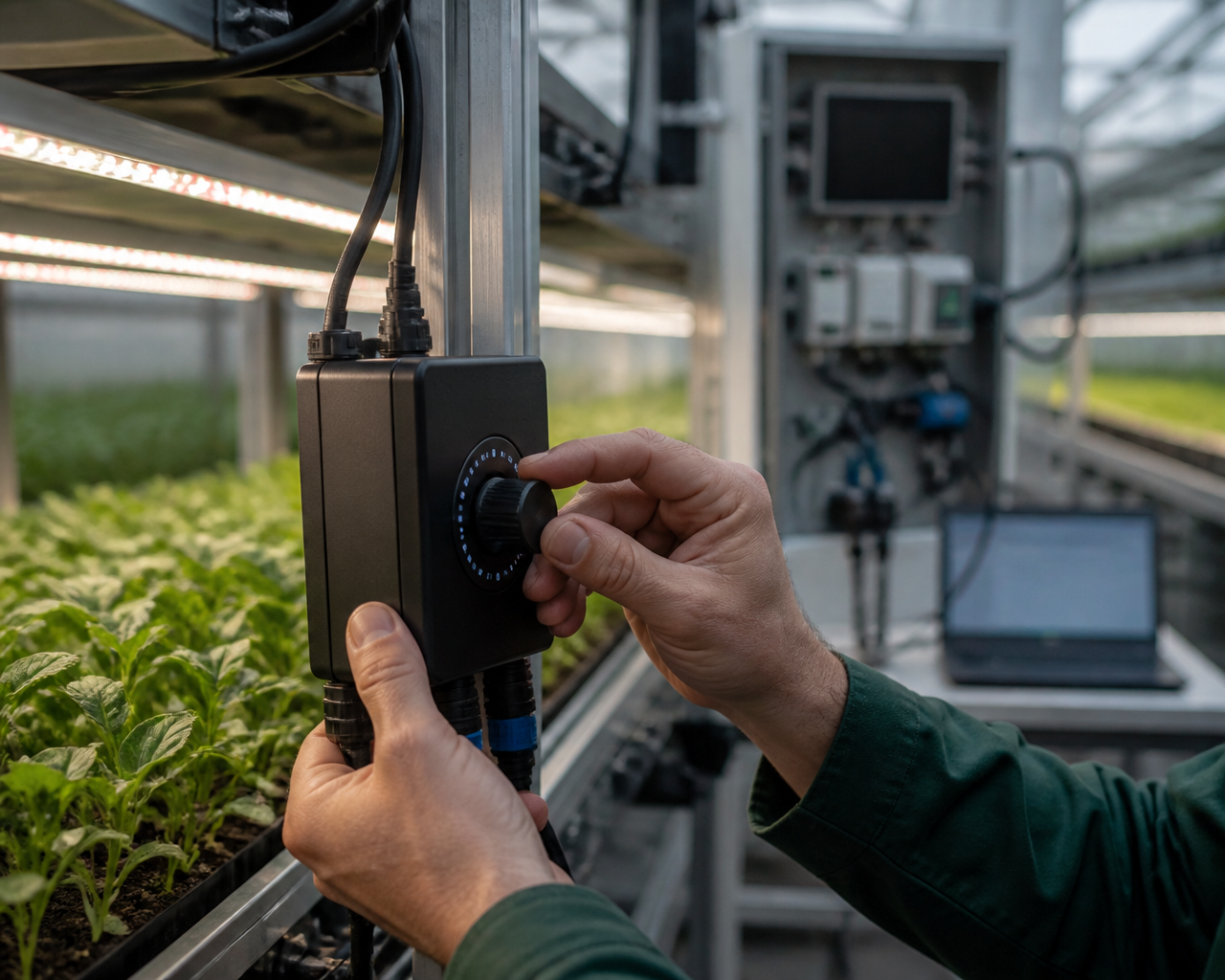
For VGD, it is precisely this level of precision that our solutions make possible. Our control units, combined with real-time measurement sensors, allow these spectral recipes to be programmed and applied with absolute fidelity – including over time, thanks to components that maintain their spectrum over 100,000 hours of use.
What new market demands do you need to anticipate in order to add value to your production?
The nutraceutical, cosmetic, and gourmet food markets have become key outlets for producers capable of guaranteeing measurable levels of biochemical quality. These buyers no longer want just freshness or volume—they want reproducible and documented molecular composition. And it is the mastery of the light spectrum that makes it possible to meet this requirement.
Let's take a concrete example. A microgreens producer who precisely controls their lighting can guarantee a restaurant client consistent chlorophyll levels, pigmentation, and aromatic profile from batch to batch. This level of consistency, impossible to achieve with uncontrolled natural light, becomes a measurable selling point. Controlled lighting is no longer just a production tool—it becomes a quality guarantee you can offer your customers.
These new expectations also apply to urban and vertical agriculture, which is experiencing strong growth. These systems require compact, low-heat, and perfectly controllable luminaires – exactly the characteristics that next-generation high-performance LEDs offer, where older HPS systems cannot adapt.
What concrete prospects await you in 2027?
For 2027, three major trends are shaping the landscape in which you will invest and produce: the generalization of dynamic control with integrated sensors, the rise of vertical agriculture as an outlet for compact LED solutions, and the valorization of production data as a fully-fledged agronomic asset.
Dynamic piloting, soon to be indispensable
Flat control (on/off with a timer) will gradually disappear from competitive professional farms. The systems that will become standard in 2027 will allow for adjusting light intensity based on real-time measurements of natural light, integrating greenhouse climate data, and varying light spectra according to the different phases of the growing cycle. For VGD, this evolution is already integrated into our solutions: our control units are 100% compatible with the agro-climatic management systems on the market.
Vertical farming: a market that demands LED precision
Vertical farming growth projections have remained consistent for the past three years. This production model can only function with LEDs: lack of natural light, thermal constraints, and limited space. The opportunities for producers wishing to diversify into this format are real – provided they have suitable lighting from the outset.
Data as a production asset
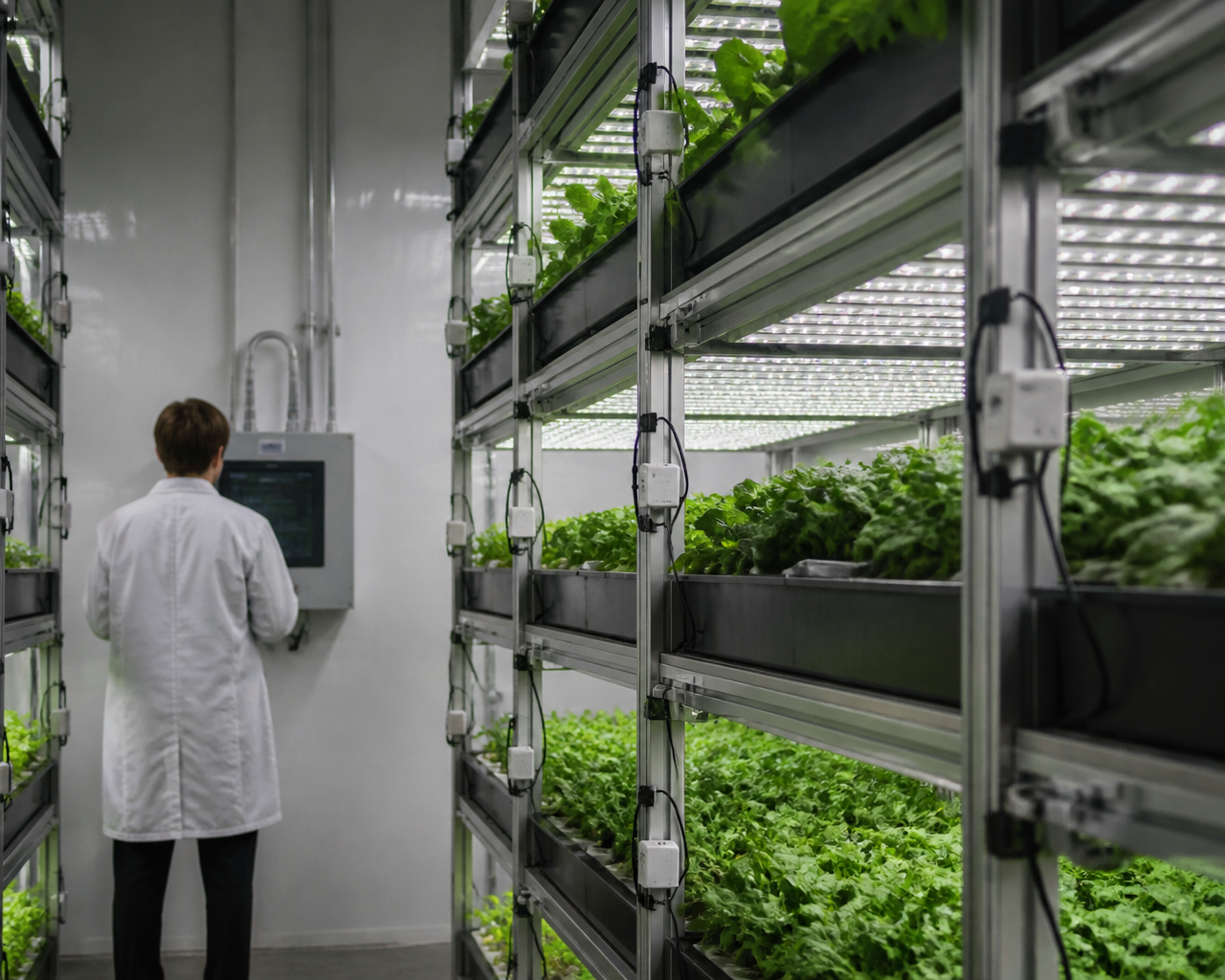
Light measurement sensors (DLI, PPFD) are no longer just for initial setup – they constitute an agronomic database that allows growers to understand, reproduce, and improve results from one cycle to the next. Producers who have invested in measuring and tracking their lighting by 2027 will have a sustainable competitive advantage.
What is the true cost of an obsolete system, and how do you calculate the ROI of a renovation?
The main pitfall when making a lighting investment decision is comparing only the purchase price. An HPS system or a first-generation LED may seem cost-effective at first – but the total cost of ownership over 5 years (energy, maintenance, consumables, performance degradation) often far exceeds that of a recent high-efficiency LED solution.
Two technical problems are particularly underestimated. The first is thermal drift: a chip that overheats changes its emission spectrum over time. You program a specific spectral profile, but the plant receives a different spectrum after a few months. The second is the gradual loss of efficiency in HPS systems: their output decreases by 10 to 15% per year, meaning you pay the same electricity bill for less usable light.
"The replacement of obsolete systems (HPS) represents the most dynamic market segment, with a projected 59% market share by 2035." - Global Market Insights, Reports 2026-2035
To calculate the true ROI of a renovation, the following elements must be considered: annual energy savings (often 40 to 50% with an LED >3,0 µmol/J vs. HPS), reduced maintenance costs, elimination of consumables (bulbs, ballasts), increased productivity, and improved commercial value of crops through enhanced biochemical quality. At VGD, our operational audits precisely incorporate all these parameters to provide you with a comprehensive overview before any decision is made.
What are the 4 practical tips for preparing your 2027 lighting strategy?
Preparing your 2027 investments isn't just about choosing a light fixture from a catalog. Four concrete actions will allow you to approach the next season with a coherent, profitable lighting strategy aligned with market trends.
Tip 1: Audit your installation before making any purchase
An audit of your current setup is the first, non-negotiable step. This involves precisely measuring what your plants are actually receiving (PPFD, DLI, uniformity), identifying under-lit or overheated areas, and assessing the condition of your equipment. Without this initial assessment, any investment is based on assumptions rather than data—and the risk of over- or undersizing is high. Smart light sensors enable this real-time mapping.
Tip 2: Prioritize investments with high energy and quality leverage
There's no need to renovate everything in one season. Identify the areas or crops where the current lighting is most limiting—either in terms of energy efficiency (old HPS) or spectrum quality (first-generation LEDs without driver control). Start with these high-leverage areas, calculate the return on investment, and then gradually expand.
Tip 3: Integrate management from the very first investment
A single light fixture, however efficient, remains a limited tool without control. Investing in a control unit compatible with your climate control system from the outset lays the foundation for data-driven operation. The marginal cost of control at the time of purchase is negligible compared to the cost of retrofitting later.
Tip 4: Follow spectral trends according to your target markets
If you produce for premium markets (food service, nutraceuticals, cosmetics), inquire about the specific spectral requirements for your priority crops. The lighting recipes that maximize terpene production in basil are not the same as those that accelerate flowering in cherry tomatoes—and your lighting supplier should be able to guide you on this agronomic, not just technical, front.
Decision checklist: which technical and economic criteria are non-negotiable in 2026-2027?
Before finalizing any investment in horticultural lighting for 2027, review the following criteria. Any equipment or project that does not meet all of these points warrants reconsideration or further investigation.
- Minimum efficiency: Does the luminaire reach more than 3,0 µmol/J under real operating conditions?
- Spectral stability: Does the supplier guarantee spectrum fidelity over time (chip technology, documented thermal management)?
- Compatible piloting: Is the system compatible with your existing or planned agro-climatic management system?
- Integrated measurement: Does your project include light sensors to validate the PPFD and DLI values actually received by your crops?
- ROI calculated over 5 years: Have you included energy, maintenance, consumables and quality improvement in your profitability calculation?
- Spectral adaptability: Does the system allow you to differentiate between "growth" and "metabolic finishing" programs according to your production goals?
- Agronomic support: Is your supplier able to advise you on spectral recipes adapted to your crops, not just on the material aspect?
F.A.Q
What minimum efficiency should be required of a professional horticultural LED in 2026?
The benchmark for a worthwhile investment in 2026 is 3,0 µmol/J. Below this level, you pay more for energy for less photosynthetically active light. High-performance equipment today achieves 3,2 to 3,5 µmol/J, representing a significant saving on your electricity bill in the long term.
How can I tell if my HPS system needs to be upgraded or if I should wait?
The question isn't "Is my HPS system still working?" but "What is its total cost of ownership compared to an equivalent LED system over 5 years?" An HPS system loses 10 to 15% of its efficiency per year and requires regular replacement of bulbs and ballasts. An audit of your current installation allows us to calculate precisely when a upgrade becomes profitable—in the vast majority of cases, this point is reached by the second or third year.
What is a "biochemical signature" and how can I obtain it with my lighting?
A "biochemical signature" refers to the molecular profile of a crop: terpene levels, antioxidant activity, pigmentation, and essential oil concentration. These parameters are directly influenced by the spectral composition of the light received by the plant. To achieve this, a light with a variable spectrum and a control unit are required, allowing for the application of different programs depending on the growth stage—in particular, a "metabolic finishing" program for the last 5 to 7 days before harvest.
Is intelligent management accessible to small farms?
Yes. Control systems have become considerably more accessible. Modular solutions allow you to start with a control unit in a pilot area and then gradually expand to the entire operation. The initial investment in control is quickly recouped through energy savings and quality improvements – regardless of the size of the area.
How does VGD concretely support producers in their investment decisions?
VGD offers comprehensive support: audit of the existing installation with on-site measurements, calculation of a personalized ROI, recommendation of solutions tailored to each crop type and area, and then technical support after installation. The goal is for each investment to be validated by data, not estimates – and for the chosen solution to precisely match the producer's agronomic and economic objectives.
Conclusion: the next season begins with a brilliant decision
The basil producer mentioned in the introduction did not reinvent his profession. He simply understood, before others, that light is the only input that can be programmed, measured, adjusted and optimized continuously - and that this mastery translates directly into market value for each harvested batch.
The 2026 market confirms what the field already showed: the farms that will perform well in 2027 and beyond are those that have invested in lighting precision – not just in installed power. High-performance LEDs, dynamic control, measurement sensors, spectral recipes tailored to each crop and each target market – these elements are no longer reserved for large operations. They are accessible, cost-effective, and decisive.
At Vegetal Grow Development, we build every project on a simple conviction: well-controlled lighting isn't just for illuminating a greenhouse; it's for controlling the growth, quality, and profitability of what's inside. 💡🌱
Do you want to assess your current installation, calculate the return on investment of a renovation or prepare your 2027 lighting strategy? Contact the VGD team for a personalized technical audit - and make your investment decisions with data, not assumptions.